
Introduction
Als het gaat om audiovisuele installaties – of het nu voor een vergaderzaal, een thuisbioscoop of een professionele ruimte is – is de kwestie van de resolutie onontkoombaar.
Moet je kiezen voor 2K of 4K?
Although 4K is now ubiquitous in marketing hype, the reality is often very different in practice. Given the available content, the technologies used and the actual needs of users, this decision warrants a thorough analysis.
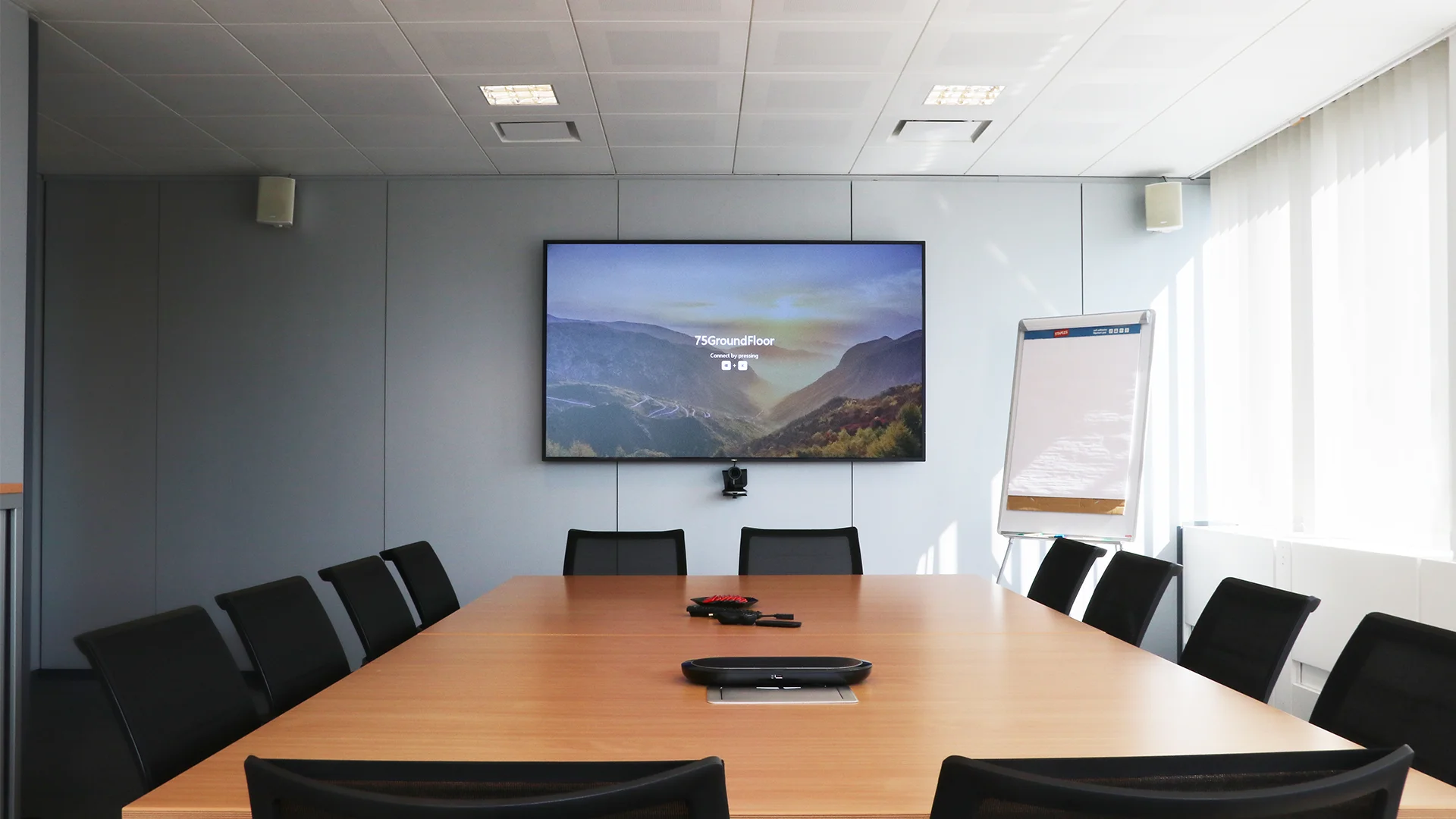
2K vs 4K: the differences explained
The 2K resolution corresponds to a resolution of 1920 x 1080 pixels, also known as Full HD.
This resolution became widely established in the 2000s with the arrival of Blu-ray players, games consoles such as the PS3 and the Xbox, and the first high-resolution screens.
The 4K resolution corresponds to 3840 x 2160 pixels (UHD), which is four times as many pixels as 2K.
In practical terms, this means:
But is that difference always visible? Not necessarily.
4K: a promise that needs to be qualified
Contrary to what you might think, the fact is that: the majority of available content is still in 2K
Films, presentations, professional content… Native 4K still has a relatively small market share (around 15% of the market).
Direct consequence: Most 4K devices use a technology known as upscaling.
Upscaling: fake 4K?
Result:
Upscalingmeans that a 2K image is converted to 4Kby artificially increasing the number of pixels.
It depends:
This is why two 4K devices can produce very different results.
Monitor vs projector: two different approaches
Monitors (screens)
Nowadays, as soon as you go above 32 inches, 4K has become the norm.
Why?
In that case, there’s hardly any question about it: 4K is the way to go.
Spotlights
When it comes to projectors, the situation is different:
In a standard image, the difference may be barely noticeable.
What criteria should you use when choosing?
The choice between 2K and 4K should never be based solely on resolution.
The following must be taken into account:
1. The type of content
2. Image size
3. Viewing distance
4. The budget
Specific case
A standard meeting room in a company:
The result: 2K is more than enough in 90% of cases
A high-end conference room or showroom:
The result: 4K is becoming appealing
The most common mistake
Many companies opt for 4K simply to ‘look modern’.
Problème :
A good installation depends not only on the resolution, but on the system as a whole.
Conclusion: 2K or 4K?
In summary:
The right choice always depends on:
AV Application’s expert opinion
At AV Application, we always recommend a bespoke approach.
Rather than following trends, we analyse your needs to offer the most suitable solution
